Our Publications
Our publications contribute novel ideas, cutting-edge developments, and valuable insights to our industry. Our shared passions range from improving rolling models and flatness control, to process line digital twins and galvanizing air knives. We are always seeking to improve our models and expand our understanding.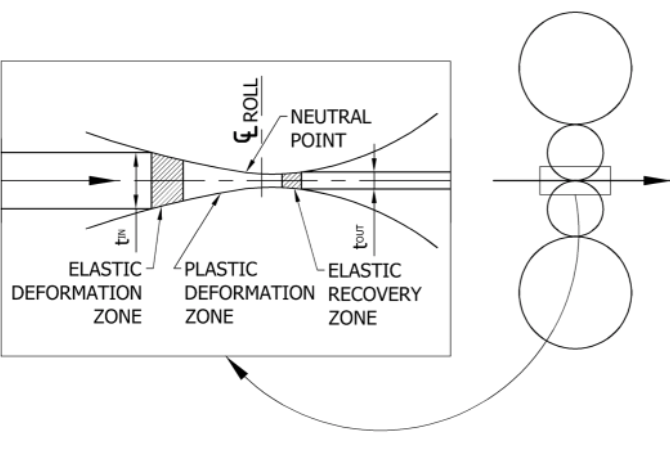
LIGHTWEIGHT
WORK ROLL
FLATTENING
MODEL FOR
SEVERE ROLLING
CONDITIONS
Rolling models assuming a circular
deformed roll profile have been
successfully used for many years. They
are known to have deficiencies on hard
materials, thin gauges and low
reductions. Modern numerical models
with fully elastic roll deformation are a
solution, but the computational cost is
too high to have widespread use. A
simplified model is presented that
captures the essential elements of the
fully elastic deformed roll shape and can
be applied on Bland-Ford-style rolling
calculations.

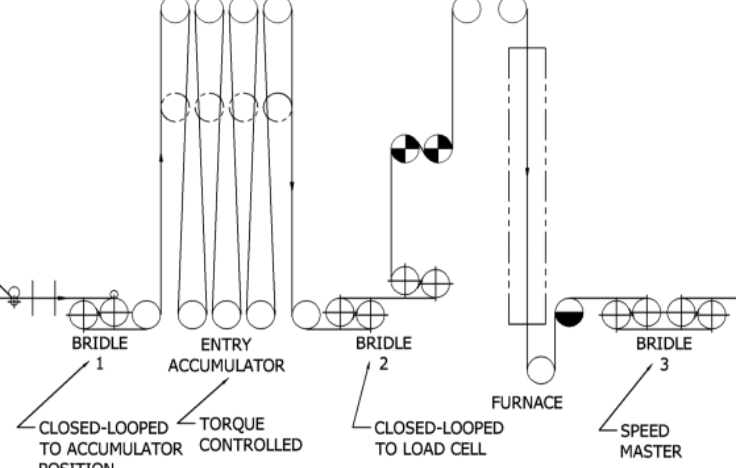
STRIP TRANSPORT
DIGITAL TWIN
A strip transport digital twin simulates the
process, equipment and control systems
across a whole processing line based on the
properties of the strip, the design of the
equipment and regulation, and setup of the
control. High-density recorded process data
is used to tune the model for higher
accuracy. Strip transport digital twins have
proven valuable in a variety of applications
related to tension setup and regulation,
production capability, strip tracking, tension-
related defects, roll wear and slip,
equipment failures, and drive overloads.
Digital twins are useful on both existing
lines and in the design of new equipment.

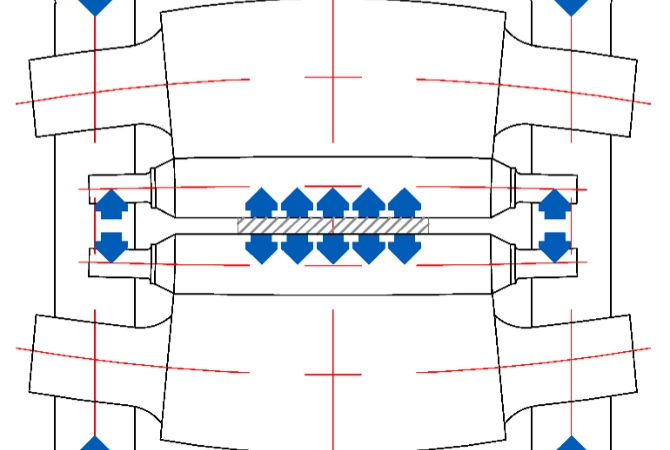
NON-LINEAR
BENDING
CONTROL FOR
TEMPER MILLS
Although proper bending force is critical
to maintaining good strip shape, temper
mill bending control is often relatively
simplistic. This paper presents the
sources of bending-related shape defects
and the solutions used to overcome
them.

OPTIMIZING FOR
MILL HOUSING
DEFLECTION
WITH
ANALYTICAL
EQUATIONS
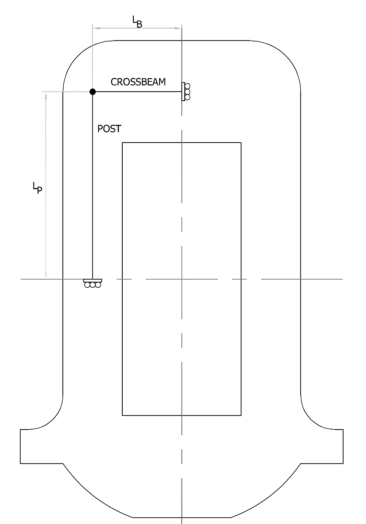
Mill stretch is an important parameter in
achieving accurate gauge control in
rolling. Vertical mill housing deflections
are an important component of total mill
deflection. Horizontal mill housing
deflections are an important in controlling
clearance between roll chocks and
window liners. Building on prior work,
improved analytical housing deflection
equations have been derived by including
the shear deflection component. Both
vertical and horizontal deflections show
good agreement with finite element
analysis providing opportunities to
optimize window setup, control and
housing design.

NEW SOLUTIONS TO OLD PROBLEMS















Our
Publications
Our publications contribute novel ideas, cutting-edge developments, and valuable insights to our industry. Our shared passions range from improving rolling models and flatness control, to process line digital twins and galvanizing air knives. We are always seeking to improve our models and expand our understanding.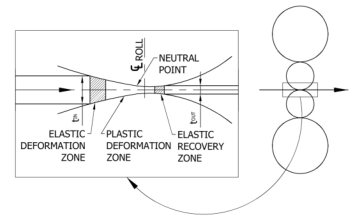
LIGHTWEIGHT
WORK ROLL
FLATTENING
MODEL FOR
SEVERE
ROLLING
CONDITIONS
Rolling models assuming a circular
deformed roll profile have been
successfully used for many years. They
are known to have deficiencies on hard
materials, thin gauges and low
reductions. Modern numerical models
with fully elastic roll deformation are a
solution, but the computational cost is
too high to have widespread use. A
simplified model is presented that
captures the essential elements of the
fully elastic deformed roll shape and
can be applied on Bland-Ford-style
rolling calculations.

STRIP
TRANSPORT
DIGITAL TWIN
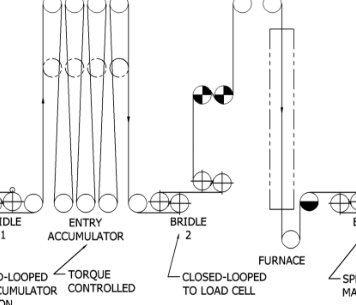
A strip transport digital twin simulates
the process, equipment and control
systems across a whole processing line
based on the properties of the strip,
the design of the equipment and
regulation, and setup of the control.
High-density recorded process data is
used to tune the model for higher
accuracy. Strip transport digital twins
have proven valuable in a variety of
applications related to tension setup
and regulation, production capability,
strip tracking, tension-related defects,
roll wear and slip, equipment failures,
and drive overloads. Digital twins are
useful on both existing lines and in the
design of new equipment.
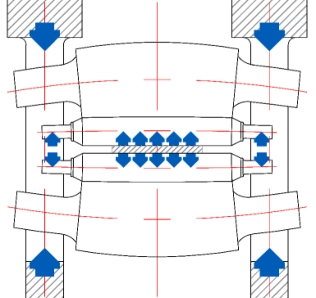
NON-LINEAR
BENDING
CONTROL FOR
TEMPER MILLS
Although proper bending force is
critical to maintaining good strip
shape, temper mill bending control is
often relatively simplistic. This paper
presents the sources of bending-
related shape defects and the
solutions used to overcome them.
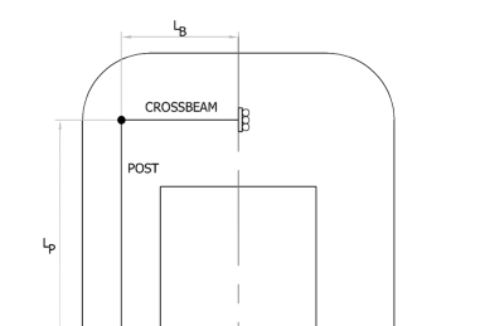
OPTIMIZING
FOR MILL
HOUSING
DEFLECTION
WITH
ANALYTICAL
EQUATIONS
Mill stretch is an important parameter
in achieving accurate gauge control in
rolling. Vertical mill housing deflections
are an important component of total
mill deflection. Horizontal mill housing
deflections are an important in
controlling clearance between roll
chocks and window liners. Building on
prior work, improved analytical
housing deflection equations have
been derived by including the shear
deflection component. Both vertical
and horizontal deflections show good
agreement with finite element analysis
providing opportunities to optimize
window setup, control and housing
design.
NEW SOLUTIONS TO OLD PROBLEMS